


MODULE 10 - THOMAS KILMANN AND CONFLICT STYLES TYPES SKILLS

Updated: Mar 15

The concept of organizational conflict, examining its various definitions, potential impacts on organizational effectiveness, and common sources. It then delves into strategies for managing and resolving conflict within organizations.
Defining Conflict
The term "conflict" has numerous definitions within organizational studies. Some view it as behavior intended to obstruct others, while others see it as a clash of perceived incompatible concerns. A common thread across definitions is the notion of perception: conflict exists only if parties involved perceive it. Additionally, conflict often involves opposition, scarcity, and blockage, with resources being limited and one party's actions hindering another's goal achievement.
Conflict Resolution Types
Mediation: This method involves using a neutral third party to facilitate the communication and negotiation between the conflicting parties, helping them to reach a voluntary and mutually acceptable agreement. Mediation can be useful when the parties have difficulty communicating or trusting each other, when the conflict is complex or emotional, or when the parties need an impartial perspective. Mediation can help the parties to understand each other’s interests and needs, to generate creative options, and to preserve or improve their relationship. However, mediation can also have some challenges, such as finding a suitable mediator, ensuring the confidentiality and voluntariness of the process, and dealing with power imbalances or resistance.
Arbitration: This method involves using a neutral third party to hear the arguments and evidence from the conflicting parties and to make a binding decision for them. Arbitration can be useful when the parties want a quick and final resolution, when the conflict involves technical or legal issues, or when the parties have agreed to use this method beforehand. Arbitration can help the parties to save time and money, to avoid litigation, and to have more control over the process and the outcome. However, arbitration can also have some drawbacks, such as losing the opportunity to negotiate or collaborate, accepting a decision that may not satisfy either party, and having limited appeal options.
Conciliation: This method involves using a neutral third party to improve the communication and relationship between the conflicting parties, helping them to reduce their hostility and mistrust and to move towards a resolution. Conciliation can be useful when the parties have a long-standing or deep-rooted conflict, when the conflict has escalated or become violent, or when the parties need to restore or maintain their relationship. Conciliation can help the parties to express their emotions and grievances, to acknowledge and apologize for their actions, and to rebuild their trust and respect. However, conciliation can also have some limitations, such as requiring a high level of commitment and cooperation from the parties, depending on the skills and personality of the conciliator, and not guaranteeing a resolution.
Negotiation: This method involves the direct communication and exchange between the conflicting parties, aiming to reach a mutually beneficial agreement. Negotiation can be useful when the parties have common or compatible interests or goals, when the parties have equal or similar power or status, or when the parties want to preserve or enhance their relationship. Negotiation can help the parties to explore their options and preferences, to create value and synergy, and to achieve a win-win outcome. However, negotiation can also have some challenges, such as dealing with different styles or strategies, managing emotions and biases, and overcoming impasses or deadlocks.
IBR - Interest-Based Relational Approach: This method involves separating the people and their emotions from the problem, and focusing on the underlying interests of the parties involved, rather than their positions. It is based on the premise that conflicts can be resolved by understanding the needs and interests of the partiesinvolved, andfinding solutions that satisfy those interests. IBR can be useful when the parties want to achieve the best possible outcome, when the parties have different or complementary skills or resources, or when the parties need to enhance the relationship. IBR can help the parties to communicate effectively, to generate creative and integrative solutions, and to address the root causes or underlying interests of the conflict. However, IBR can also have some difficulties, such as requiring trust and openness from the parties, needing enough time and resources, and dealing with complex or multiple issues.
Conflict and Organizational Effectiveness
Traditionally, conflict has been viewed negatively, hindering organizational coordination and teamwork. However, an alternative perspective suggests conflict can be functional, stimulating positive change and improving decision-making.
The Traditional View: This view assumes all conflict is bad, hindering organizational effectiveness. Managers focus on minimizing or eliminating conflict.
The Interactionist View: This view acknowledges that organizations without conflict might be stagnant and unresponsive to change. Conflict can be a catalyst for innovation and improvement. However, excessive conflict can be detrimental. Managers should aim for an optimal level of conflict, fostering healthy debate while preventing escalation.
Sources of Organizational Conflict
Several factors can contribute to conflict within organizations:
Incompatible Personalities: Some individuals simply don't get along, leading to interpersonal conflict.
Structural Sources: These are more prevalent and relate to the organization's structure. Examples include:
Mutual Task Dependence: When units rely on each other for tasks, conflict can arise from differing priorities or communication breakdowns.
One-Way Task Dependence: When one unit depends heavily on another for resources, the dominant unit may have little incentive to cooperate, leading to resentment.
High Horizontal Differentiation: Units with vastly different tasks and cultures may have conflicting goals and perspectives.
Low Formalization: Lack of clear rules and procedures can create ambiguity and competition for resources, leading to conflict.
Dependence on Scarce Resources: When resources are limited and units compete for them, conflict is likely.
Differences in Evaluation Criteria and Reward Systems: When units are evaluated on individual performance rather than collaboration, conflict can arise from competing priorities.
Participative Decision Making: While encouraging collaboration, participation can also expose existing differences and lead to disagreements.
Heterogeneity of Members: Diverse teams can struggle with communication and collaboration due to differences in background, values, and experiences.
Status Incongruence: Inconsistencies in perceived status between individuals or departments can create friction.
Role Dissatisfaction: Unfulfilled expectations or a sense of being undervalued can lead individuals to disrupt the system and create conflict.
Communication Distortions: Miscommunication due to ambiguity, lack of knowledge, or deliberate withholding of information can fuel conflict. Interestingly, too much information can also be problematic, revealing potential inequities and intensifying conflict.
Conflict Resolution Techniques
When conflict becomes dysfunctional, hindering organizational effectiveness, managers need strategies to address it. Here are some common techniques:
Superordinate Goals: Establishing a common, highly desirable goal that requires collaboration between conflicting parties can unify them and reduce conflict.
Reduce Interdependence Between Units: Buffers (inventories) or coordination positions can be used to reduce reliance between units and minimize conflict.
Expanding Resources: If possible, increasing resources can satisfy the needs of all parties involved in a conflict.
Mutual Problem Solving: This technique involves bringing conflicting parties together to identify the root cause of the conflict and work collaboratively towards a solution. It's most effective for addressing misunderstandings.
Appeals Systems: Formal grievance procedures allow employees to seek redress for perceived injustices, providing a channel for conflict resolution.
Ombudsmen: Some organizations appoint ombudsmen, neutral third parties who can mediate disputes and help find solutions.
Conflict is an inevitable part of organizational life. By understanding its nature, sources, and potential impact, managers can develop strategies to manage conflict effectively. Fostering healthy levels of conflict can stimulate positive change and improve decision-making, while minimizing dysfunctional conflict ensures a collaborative and productive work environment.
THOMAS KILMAN
Managing Conflict Styles
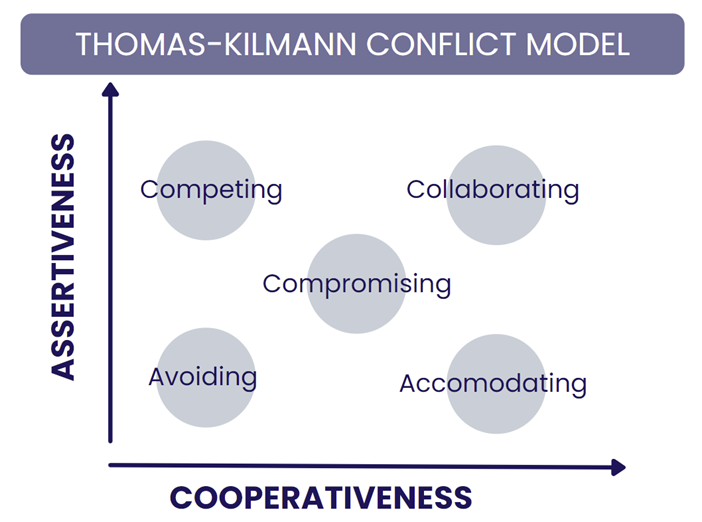
People have inherent preferences for how they approach conflict. Understanding these styles can be instrumental in navigating disagreements constructively.
Competing: People with this style prioritize winning and getting their way. They may use assertive communication, forceful arguments, and even aggression to achieve their goals. In some situations, this style can be effective in achieving quick results, but it can also damage relationships and lead to resentment.
Avoiding: Those who avoid conflict prefer to downplay disagreements and withdraw from situations. They might procrastinate on addressing issues or try to smooth things over superficially. While this style can prevent immediate conflict, it can allow underlying tensions to fester and resurface later.
Compromising: Individuals with this style seek solutions that partially satisfy everyone involved. They are willing to make concessions to reach a common ground. Compromise can be a valuable tool, but it can also lead to suboptimal solutions if underlying issues are not addressed.
Accommodating: People with this style prioritize harmony over their own needs. They readily concede to the other party's wishes to avoid conflict. While this approach can preserve relationships, it can breed frustration and feelings of being taken advantage of.
Collaborating: This style involves working together to find a solution that fully addresses the concerns of all parties. It requires open communication, empathy, and a willingness to explore creative solutions. Collaboration is generally the most effective style for long-term conflict resolution, but it requires time and effort.
Strategies for Managers:
Managers can play a crucial role in shaping how conflict is handled within their teams. Strategies they can employ to handle team conflicts:
Identify Conflict Styles: By recognizing the preferred styles of team members, managers can anticipate potential roadblocks and guide communication more effectively.
Adapt Communication Style: Managers should adjust their communication style to best address the conflict style of the other party. For instance, a more assertive approach might be necessary when dealing with someone who uses a competing style, while active listening and empathy are key when dealing with someone who avoids conflict.
Facilitate Open Communication: Encourage open and honest communication within the team. Create a safe space where team members feel comfortable expressing their views without fear of retribution.
Focus on Interests, not Positions: During conflict resolution, it's important to focus on underlying interests (needs, goals) rather than entrenched positions. This helps identify areas of common ground and fosters collaborative problem-solving.
Promote Respectful Communication: Discourage personal attacks and encourage respectful communication, even during heated discussions.
By understanding conflict styles and implementing these strategies, managers can equip their teams to navigate disagreements productively, fostering a collaborative and innovative work environment.
Impact of Conflict on Individuals and Organizations:
Impact of Conflict
Conflict can have a significant impact on both individuals and organizations. Here's a closer look:
Individual Impacts:
Stress and Anxiety: Conflict can be a significant source of stress and anxiety, leading to physical and psychological health problems.
Job Dissatisfaction and Turnover: Unresolved conflict can contribute to job dissatisfaction and ultimately lead to employee turnover, which can be costly for organizations.
Decreased Morale and Productivity: Conflict can damage team morale and hinder productivity as individuals become preoccupied with the conflict rather than their work.
Organizational Impacts:
Decision-Making Quality: Conflict can lead to hasty or biased decisions as individuals prioritize winning their arguments over finding the best solution.
Decreased Innovation: A culture of fear and negativity associated with conflict can stifle creativity and innovation.
Wasted Time and Resources: Unproductive conflict consumes time and resources that could be better spent on core organizational activities.
Damaged Customer Relationships: Internal conflict can manifest in poor customer service when employees are preoccupied with disagreements.
The severity of these impacts depends on the nature and duration of the conflict. However, it's clear that effectively managing conflict is essential for both individual and organizational well-being.
The Thomas-Kilmann Conflict Mode Instrument (TKI)
The original essay briefly mentioned the TKI. Here's a more detailed explanation of its role in conflict management:
Developed by Kenneth Thomas and Klaus Kilmann, the TKI is a popular assessment tool that helps individuals understand their preferred conflict-handling style. The instrument identifies five conflict styles:
Competing: As mentioned earlier, this style prioritizes winning and assertive communication.
Collaborating: This style focuses on finding mutually beneficial solutions through open communication.
Avoiding: This style involves withdrawing from conflict situations.
Accommodating: This style emphasizes maintaining harmony by readily conceding to the other party's wishes.
Compromising: This style seeks solutions that partially satisfy everyone involved.

Avoiding: This method involves simply ignoring or avoiding the conflict, hoping that it will go away or resolve itself. People tend to use this method when they don’t want to deal with the conflict, when they think the conflict is trivial or unimportant, or when they fear the consequences of confronting the conflict. Avoiding can be appropriate when the conflict is not worth the time or effort, when the conflict is too emotionally charged, or when there is no clear or satisfactory solution. However, avoiding can also have negative consequences, such as unresolved issues, missed opportunities, or damaged relationships.
Competing: This method involves pursuing one’s own interests or goals at the expense of others, using power, authority, or assertiveness to win the conflict. People tend to use this method when they are confident about their position, when they want to protect their rights or values, or when they need to make a quick decision. Competing can be appropriate when the issue is vital or urgent, when there is a clear right or wrong answer, or when there is a need to assert one’s leadership or authority. However, competing can also have negative consequences, such as resentment, hostility, or loss of trust.
Accommodating: This method involves giving in to the other party’s wishes or demands, sacrificing one’s own interests or goals for the sake of harmony or cooperation. People tend to use this method when they value the relationship more than the issue, when they want to show goodwill or generosity, or when they realize that they are wrong or have less power. Accommodating can be appropriate when the issue is more important to the other party, when the conflict is minor or temporary, or when there is a need to maintain peace or avoid retaliation. However, accommodating can also have negative consequences, such as frustration, resentment, or loss of respect.
Compromising: This method involves finding a middle ground or a mutually acceptable solution that partially satisfies both parties, requiring some concessions or trade-offs from each side. People tend to use this method when they want to reach a quick or fair resolution, when they have similar or equal power or interests, or when they need to maintain a positive relationship. Compromising can be appropriate when the issue is complex or controversial, when there is no clear or optimal solution, or when there is a need to balance multiple perspectives or goals. However, compromising can also have negative consequences, such as dissatisfaction, suboptimal outcomes, or loss of creativity.
Collaborating: This method involves working together with the other party to find a win-win solution that fully satisfies both parties, requiring trust, communication, and creativity from each side. People tend to use this method when they want to achieve the best possible outcome, when they have different or complementary skills or resources, or when they need to enhance the relationship. Collaborating can be appropriate when the issue is important or complex, when there is enough time and resources, or when there is a need to address the root causes or underlying interests of the conflict. However, collaborating can also have negative consequences, such as time-consuming, challenging, or unrealistic processes.
Understanding your TKI style and the styles of others can be a valuable asset in navigating conflict. For instance, if you have a collaborating style, you might struggle with someone who avoids conflict altogether. Recognizing these differences can help you adjust your communication approach and facilitate more productive interactions.


Comments